Salt air and humidity
Coastal air is hard on metal finishes and connections. Material selection, sealed connections and regular inspection all matter more here than inland.
Fast-growing landscapes
Plants grow quickly in the Lowcountry climate. Fixtures that are well placed at installation can be buried or blocked within a season or two, so adjustment should be part of the plan.
Glare, neighbors and the night sky
- Choose warm color temperatures that suit the setting.
- Use shielded fixtures and aim light at surfaces, not into eyes or windows.
- Light the few features that matter instead of everything.
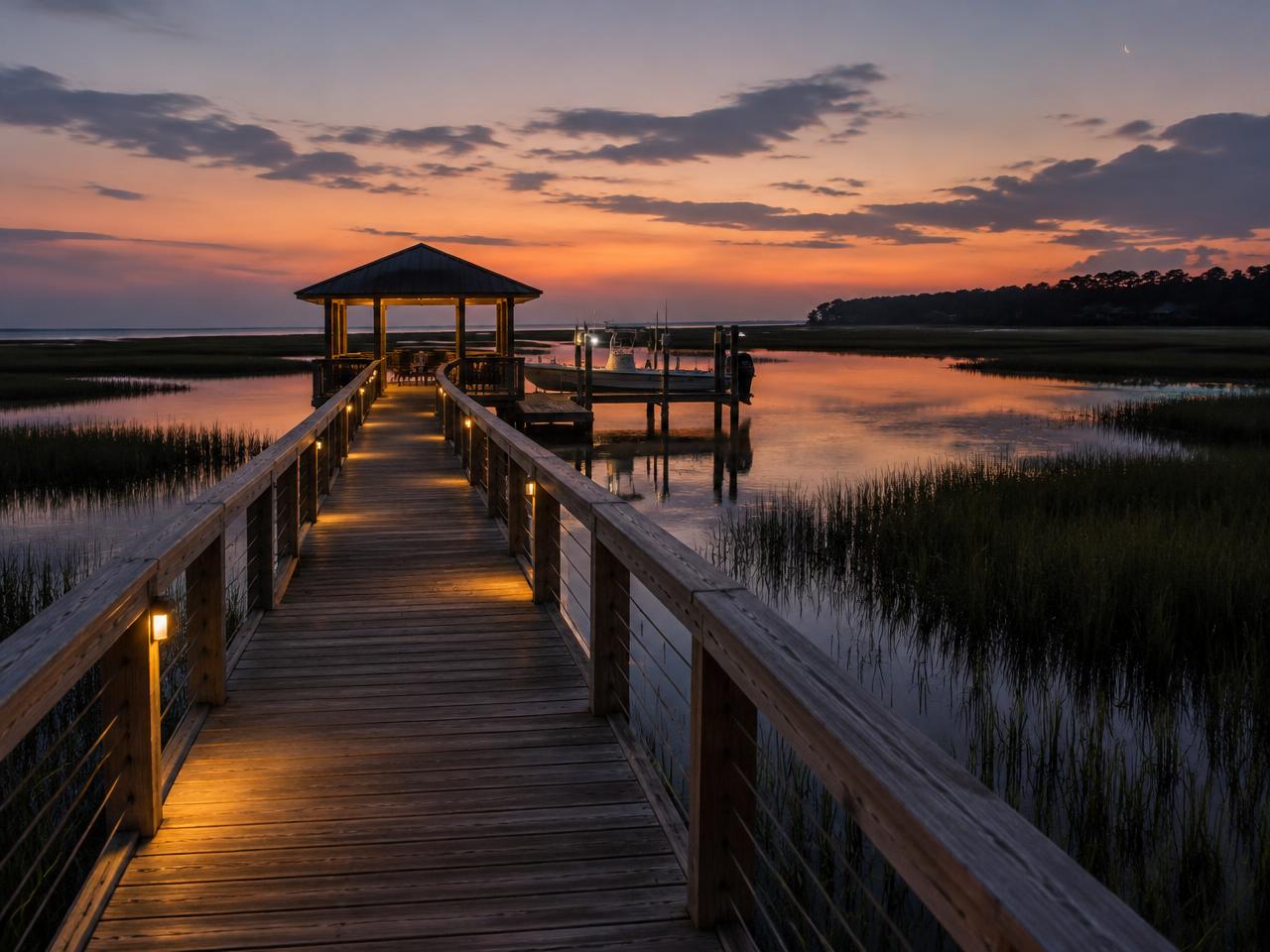
- Keep waterfront lighting low to preserve views and reflections.
Community requirements
Many Lowcountry communities, historic districts and waterfront areas have rules on exterior lighting. Review them before the design is final.